01
Imagine
See what is possible before accepting what is familiar.
Founding Edition 2026 · Florida
Approach
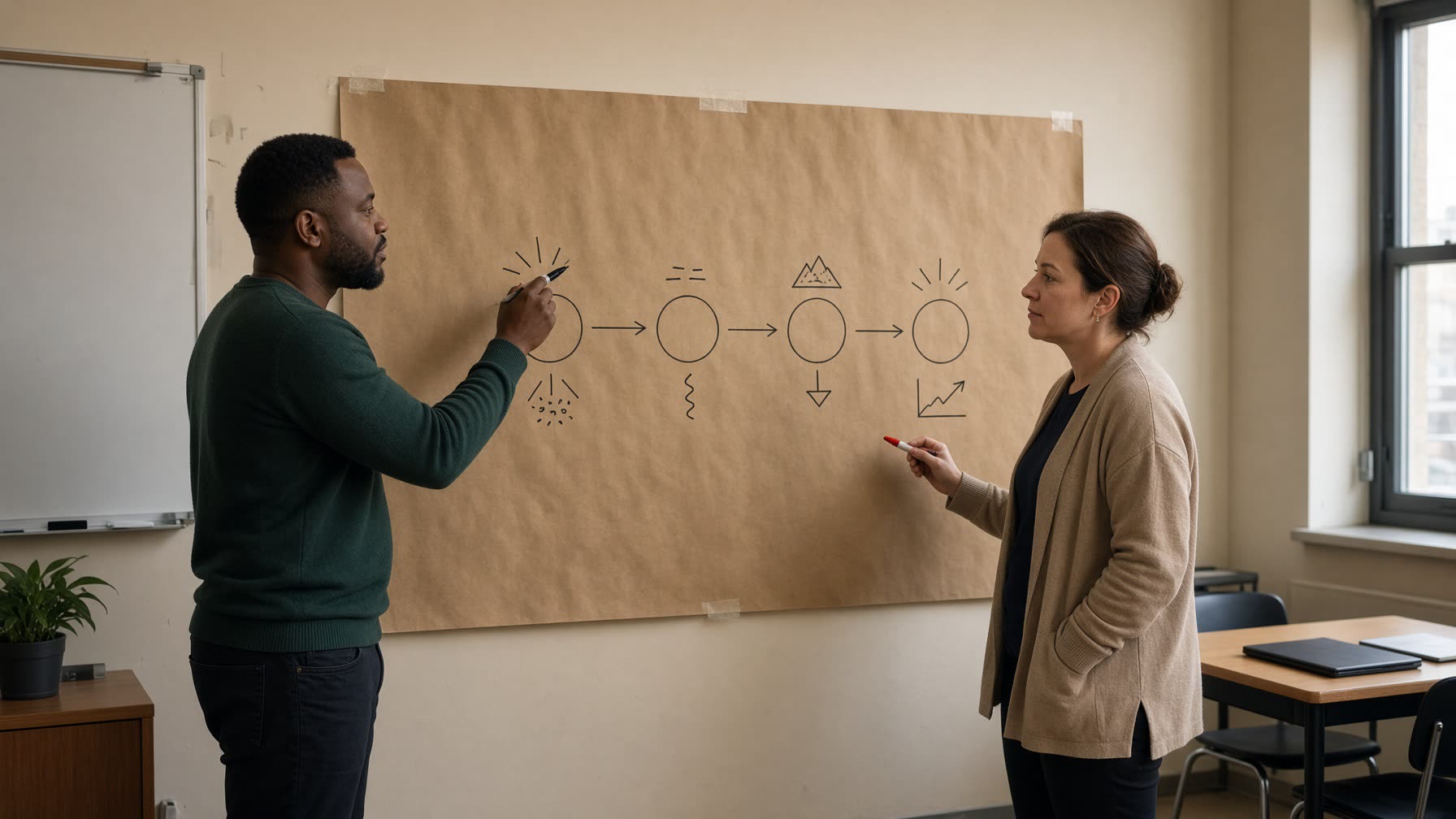
Program design begins with the need, not the product. Impact measures are identified before a program launches.
The Imagine Model
01
See what is possible before accepting what is familiar.
02
Design a practical response to a real educational need.
03
Equip people with confidence, knowledge, and a reason to act.
04
Measure whether the work produced meaningful and sustainable change.
We will not call activity impact. We will not call novelty innovation. We will not call inspiration transformation unless behavior, capacity, or outcomes improve.
Four phases
Focus
Clarify the need with local stakeholders.
Adults learn best when content is relevant, active, supported, and connected to practice.
Programs are promises. They should be designed with the same care used to make them.
Program lifecycle
No program should launch merely because a leader is enthusiastic or a funder is interested.
01
Validate the need and listen to intended participants.
02
Build the model, outcomes, budget, safeguards, and evaluation plan.
03
Test at a manageable scale and document what happens.
04
Revise based on evidence, feedback, cost, and feasibility.
05
Expand only when quality and sustainability can be preserved.
06
Close or redesign work that no longer serves the mission effectively.
The hardest part of clarity is maintaining it when opportunity, pressure, and growth arrive.
Does this clearly advance our educational purpose?
Who benefits, and is the public benefit substantial?
Does it fit our identity, values, and strategic pillars?
Can we deliver it safely, ethically, and excellently?
What will it cost in money, time, reputation, and attention?
How will we know whether it worked?
A partnership built for implementation
Imagine Education Institute helps schools and districts turn real challenges into practical, sustainable improvement. Every partnership is designed around local needs, built for implementation, and measured by results.